
What Value-Based Care Models Look Like For Modern ACOs?
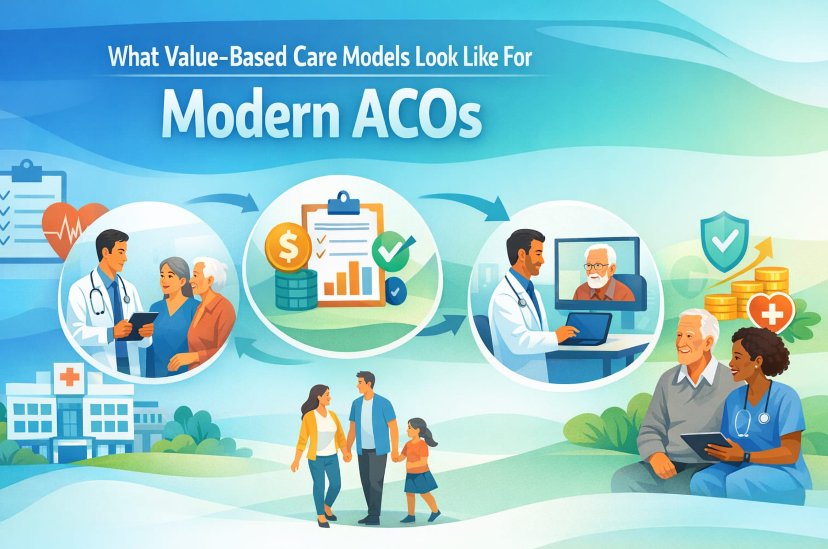
The healthcare environment has changed radically. ACOs no longer question whether they should engage in value-based care models. They pose how to become the best. MS and commercial payers have accelerated complex arrangements, including ACO REACH and advanced MSSP tracks, making strategic optimization essential for ACOs.
The difference between successful and unsuccessful ACOs does not lie in their size or resources. Success depends on converting clinical expertise, demographic insights, and operational efficiencies into strategic advantages. The modern ACOs build the capacity that was previously exclusive to the insurers, yet retain clinical orientation and direct relations with patients. The result of this is that there is a hybrid model that requires different approaches rather than general best practices.
Key Features of Value-Based Care Models in ACOs
Value-based care models for ACOs refer to payment systems in which healthcare organizations are paid incentives to provide quality results and manage expenses. In contrast to the classic system of fee-for-service models, which compensate based on network amount, such arrangements encourage ACOs to meet certain performance targets.
The contemporary ACO models are about the measurable outcomes that are beneficial to both the patients and the payers. CMS has come up with initiatives such as ACO REACH and MSSP that can compel organizations to become more financially responsible.
Core Components of VBC Models
Modern value-based arrangements include:
- Shared savings programs: ACOs earn bonuses when they reduce costs while meeting quality benchmarks
- Two-sided risk models: Organizations share both savings and losses based on performance
- Capitated payments: Fixed per-patient amounts for managing complete care
- Quality metric requirements: Minimum thresholds for patient satisfaction, chronic disease management, and preventive care
Strategic Approaches for Modern ACOs
CMS has steadily increased performance expectations across all programs. Companies that use generic strategies are left behind by others that use their strengths to excel. Success requires balancing financial responsibility with quality care, a task that demands sophisticated analytics and planning.
Assessing ACO Risk Profiles
Modern ACOs start with honest self-assessment before implementing any risk strategy. This evaluation determines which VBC models for ACOs align best with organizational capabilities and where targeted mitigation is necessary.
ACO Structures and Their Impact on Care
ACO structures vary significantly and shape risk management approaches:
- Hospital-affiliated ACOs: Embedded systems with strong infrastructure in the treatment of complex acute episodes.
- Physician-led independent ACOs: Reduced, nimble entities that are good at managing chronic illnesses and prevention.
Hospital-affiliated ACOs leverage integrated systems to reduce complications and readmissions. Independent ACOs excel in long-term patient relationships and minimizing low-value care through strong primary care.
Evaluating Core Competencies for ACO Success
Forward-thinking ACOs evaluate strengths across several dimensions:
- Provider composition and specialty mix
- Historical performance in quality and cost metrics
- Infrastructure investments in care coordination
- Geographic patient distribution and demographics
- Existing technology platforms and data capabilities
This evaluation shows where the organizations can afford to take any risk and where they require collaborations or protection.
Strategic Risk Management in Value-Based Care
Strategic risk management implies leveraging organizational strengths and reducing weaknesses by strategically working towards the same.
Leveraging Core Competencies for Performance
Every ACO has natural strengths based on provider composition and historical focus:
- Cardiology-focused ACOs embrace full risk for cardiac care, knowing specialized protocols deliver superior outcomes at lower costs
- Primary care-strong ACOs excel with complex multi-morbidity patients through established care coordination programs
These competency areas represent opportunities for risk acceptance where performance confidence is highest.
See also: Foaming Toothpaste and Natural Whitening Toothpaste for a Radiant, Healthy Smile
Implementing Risk Mitigation Strategies
For areas outside core competencies, successful ACOs employ specific techniques:
Strategic Partnerships:
- Specialty risk partners do risk on special conditions (oncology practices that take capitated payments to provide cancer care).
- The presence of post-acute networks comprising skilled nursing facilities and home health agencies helps in saving costs of post-discharge.
Financial Safeguards:
- Stop-loss coverage protects against unexpectedly high costs for individual patients.
- Smaller ACOs set thresholds at $100,000, while larger organizations use $500,000
- Performance protection mechanisms provide stability during challenging periods.
The Role of Data in Value-Based Success
Effective risk management requires that you know your data and your population. Innovative ACOs need advanced analytics to succeed in value-based structures.
Population Health Analytics for ACO Performance
VBC models for ACOs demand comprehensive data integration from multiple sources:
- Electronic health records provide real-time clinical insights
- Claims data reveals cost patterns and utilization trends
- Social determinants of health enable accurate risk stratification
- Quality metrics track performance against benchmarks
Combined, these data sources create longitudinal patient records necessary for informed risk management decisions.
Proactive Care Delivery Models
Modern ACOs move from reactive to proactive care:
- Identifying high-risk patients before costly events occur
- Intervening with the right patients at the right time
- Allocating resources efficiently based on risk scores
- Coordinating care across multiple providers and settings
AI-powered digital health platform enables care teams to analyze data effectively and intervene proactively.
Network Optimization Analysis
Effective platforms evaluate provider networks continuously:
- Performance patterns across different provider types
- Population characteristics and risk distribution
- Historical quality and cost outcomes
- Care coordination effectiveness
This analysis helps organizations select the care model best aligned with their capabilities and performance goals.
Key Takeaways
The success of modern ACOs lies in the ability to convert the organizational properties into strategic benefits in the value-based setups. It takes reality-based self-assessment, risk management, and the use of advanced data analytics to predict care delivery proactively to succeed. Companies should implement customized optimization strategies in order to be in a position to succeed financially and also provide superior patient care.
Persivia CareSpace® is an ACO population health platform powered by AI and combining both EHR, claims, clinical, and social data to form longitudinal patient records. It provides practical information on network optimization, proactive interventions, and the achievement of success in value-based care models.