Can You Charge an EV With a Portable Power Station?
Unexpected situations have a way of redefining how we use everyday technology—especially when it comes to energy and mobility. Electric vehicles rely on consistent charging, but real life doesn’t always follow the plan. A forgotten charge, an occupied station, or a remote stop can quickly turn attention to backup options. Portable power stations, once seen mainly as camping gear or home emergency backups, are now being considered for EV support in a pinch. But making it work requires more than just plugging in. With the right setup and realistic expectations, it’s a practical solution—not magic. This article explains the feasibility, limits, and best practices clearly and without the hype.
1. Yes, It’s Possible With the Right Setup
Plug your Level 1 mobile charger into the 120V outlet
Compatibility begins with recognizing how most electric vehicles already accommodate basic charging scenarios. Nearly all EVs include a Level 1 mobile charger designed for standard household outlets. Portable power stations replicate this familiar interface by providing 120V AC output, allowing the same charging cable to be used without specialized adapters. This simplicity makes the process approachable for drivers encountering unexpected low-battery situations. The vehicle does not distinguish between grid electricity and inverter-generated AC power when voltage and stability remain within acceptable ranges. Charging speeds remain modest, but functionality is preserved. As a result, the method serves as a realistic contingency rather than a replacement for dedicated infrastructure.
Most 1500W+ power stations can handle the load
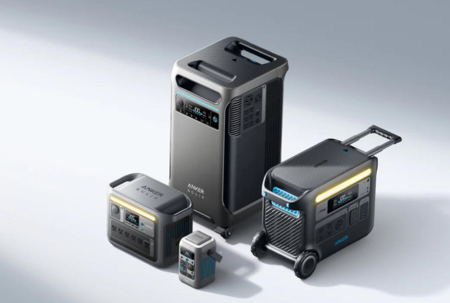
Power capacity is the most critical technical factor in evaluating feasibility. Level 1 charging typically draws between 1,000 and 1,500 watts, a threshold that many modern portable units above 1,500 watts can meet without difficulty—provided sufficient stored energy is available. But compatibility is only the starting point. Higher-capacity systems support not just Level 1 charging but also heavier loads found in recreational travel and off-grid scenarios. Devices like the Anker SOLIX F3800 Plus illustrate this shift: expanded output and specialized ports—such as NEMA TT-30P or L14-30—enable direct EV or RV charging, turning a portable power station into a more versatile energy hub. Adequate power rating, therefore, determines more than just compatibility—it directly impacts system stability, safety, and real-world usability.

2. How Much Range You Actually Get
1–2 miles of range per hour of charging
Charging an EV from a portable source requires realistic expectations regarding energy transfer rates. Level 1 charging is intentionally slow, emphasizing convenience and accessibility over speed. Under typical conditions, approximately one to two miles of driving range may be added per hour of connection. Environmental factors, battery temperature, and vehicle efficiency influence these outcomes. While the numbers may appear modest, they often suffice in short-distance recovery scenarios. Incremental gains become meaningful when the alternative involves being stranded. Viewed correctly, this charging rate represents a safety buffer rather than a productivity tool.
A full power station adds 5–10 miles
Stored energy capacity ultimately limits the total benefit achievable from a portable unit. Even large power stations contain only a fraction of an EV’s battery capacity. Depending on inverter efficiency and battery size, a fully charged station may provide roughly five to ten miles of additional range. This amount rarely supports full commutes but frequently resolves minor range deficits. Shortfalls caused by detours, weather effects, or unavailable chargers often fall within this margin. The capability transforms inconvenience into manageable delay rather than crisis. Practical value therefore lies in emergency flexibility rather than sustained driving support.
See also: ZTECH100
3. Best Use Cases for EV Charging
You’re a few miles short of a public charger
Short-range recovery scenarios represent the most logical application of portable EV charging. Drivers occasionally miscalculate distances, encounter unexpected traffic, or find planned charging locations offline. In such cases, only a small range extension may be required to reach the next viable station. Portable power stations provide precisely this type of assistance. The approach avoids towing costs, delays, and logistical complications. Convenience rather than speed defines the benefit. The solution functions best as an energy bridge rather than an energy source.
Overnight at a campsite with no hookups
Remote travel introduces additional circumstances where portable charging becomes valuable. Campgrounds, scenic stops, and temporary parking locations may lack electrical hookups entirely. Slow overnight charging from a portable station can gradually replenish minimal driving range. While not equivalent to dedicated charging equipment, the method supports basic mobility continuity. Quiet operation and emission-free performance suit outdoor environments well. Travel flexibility improves without requiring infrastructure dependence. Portable energy therefore complements the lifestyle patterns often associated with electric vehicle ownership.
4. It’s a Backup, Not a Primary Charger
Portable charging strategies must be framed within their intended role to prevent misinterpretation. Power stations excel at flexibility, mobility, and temporary support rather than continuous high-energy delivery. Attempting to treat them as primary charging solutions quickly exposes practical and economic limitations. Recharge times, storage capacity, and efficiency losses constrain sustained usage. Designed purposefully, these devices enhance resilience rather than replace infrastructure. Understanding this distinction protects both user expectations and equipment longevity. Proper context transforms the technology into a dependable contingency asset.
5. Pair With Solar for Extended Range
Charge the power station all day while you hike
Solar integration introduces an additional layer of independence for off-grid scenarios. During daylight hours, portable panels can replenish station batteries while other activities continue uninterrupted. This passive energy collection aligns naturally with outdoor travel routines. Charging occurs silently and without fuel logistics. Although solar input fluctuates with conditions, cumulative gains often offset evening consumption. Energy autonomy gradually increases across multi-day excursions. Renewable charging therefore strengthens long-term versatility.
Gain back miles every evening without grid power
Even modest daily solar gains can translate into meaningful mobility benefits. Incremental energy accumulation supports repeated small charging sessions across several days. This pattern fits extended camping, remote exploration, and slow-travel experiences. Vehicles remain usable without fixed electrical infrastructure. Energy planning becomes more predictable despite environmental variability. The strategy favors patience and efficiency rather than immediacy. Solar pairing thus enhances the practicality of portable power ecosystems.
Conclusion
Charging an electric vehicle with a portable power station is both technically viable and situationally valuable when approached with informed expectations. Compatibility depends primarily on output capacity, stored energy, and charging method selection. While range gains remain limited, their importance in contingency scenarios should not be underestimated. Portable solutions function best as emergency buffers, travel companions, and resilience tools rather than primary charging systems. Advancements in power station design continue expanding their usefulness across transportation contexts. When integrated thoughtfully into broader energy planning, these devices provide reassurance and adaptability. Understanding capabilities and limits ultimately defines successful usage.