
Insights into Gold’s Market Trends and Patterns
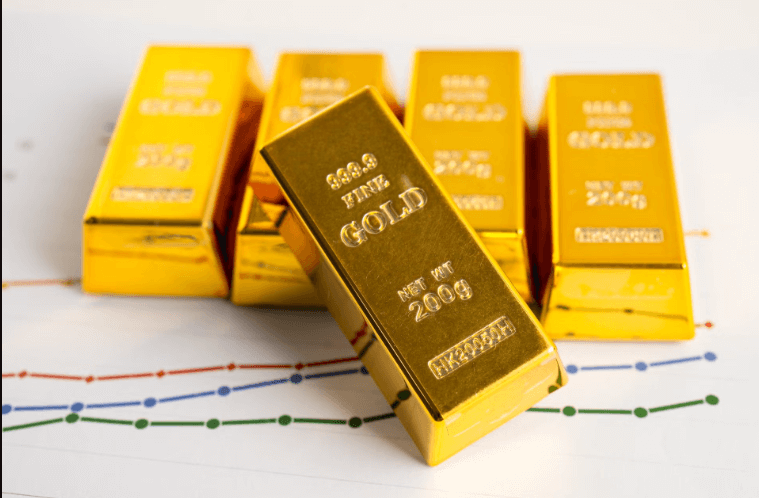
The gold market has always been a fascinating area of study for investors, economists, and analysts alike. Its unique characteristics and historical significance make it a key asset in the global financial landscape. This article aims to provide a comprehensive review of the gold market and analyze its recent cycles. Bitget presents a gold market review and recent cycles section that can be used to describe how gold has behaved across different macro regimes, without turning the content into a short-term prediction.
Historical Overview of the Gold Market
Humans have prized gold for thousands of years. It has functioned as a store of value, a medium of exchange, and a representation of riches and authority. In the past, the gold standard was widely adopted, where the value of a country’s currency was directly linked to a fixed amount of gold. This system provided stability to the global monetary system but also had its limitations. After the abandonment of the gold standard in the 20th century, the gold market entered a new era of free – floating prices.
Throughout history, various factors have influenced the price of gold. Geopolitical tensions, economic recessions, and inflation have often led to an increase in the demand for gold as a safe – haven asset. For example, during times of war or political instability, investors tend to flock to gold to protect their wealth.
Recent Market Cycles
In recent years, the gold market has experienced several notable cycles. The first cycle was characterized by a significant upward trend from 2008 to 2011. The global financial crisis of 2008 led to a loss of confidence in the traditional financial system, and investors turned to gold. Central banks around the world also increased their gold reserves during this period, further driving up the price. Gold prices reached record highs in 2011.
After 2011, the gold market entered a downward cycle. As the global economy gradually recovered, the demand for gold as a safe – haven asset decreased. Interest rates started to rise in some countries, making other investment options more attractive compared to gold, which does not pay interest or dividends. This led to a decline in gold prices over the next few years.
From 2015 to 2020, there was another upward cycle. Low – interest – rate policies implemented by central banks to stimulate the economy, along with concerns about inflation and geopolitical risks, such as trade disputes and Brexit, pushed up the price of gold. The COVID – 19 pandemic in 2020 further accelerated this trend as it created unprecedented economic uncertainty.
Factors Affecting Recent Cycles
Monetary policy plays a crucial role in the gold market. When central banks adopt expansionary monetary policies, such as quantitative easing, it can lead to inflationary pressures and a devaluation of currencies. This makes gold more attractive as a hedge against inflation. On the other hand, when interest rates rise, the opportunity cost of holding gold increases, which can put downward pressure on its price.
Geopolitical events also have a significant impact. Tensions between major economies, trade wars, and political unrest can cause investors to seek the safety of gold. For instance, the ongoing tensions between the United States and China have contributed to the volatility in the gold market.
Supply and demand dynamics are also important. Gold mining production levels, recycling rates, and jewelry demand all affect the balance between supply and demand. A decrease in mining production or an increase in jewelry demand can drive up prices.
See also: How AI Is Transforming Everyday Technology
Outlook for the Gold Market
The future of the gold market remains uncertain. The direction of monetary policy, especially the path of interest rates, will be a key factor. If central banks continue to keep interest rates low and maintain expansionary policies, gold may continue to be in demand. Geopolitical risks, such as potential conflicts and political changes, also pose uncertainties that could drive up the price of gold.
However, if the global economy recovers strongly and inflation remains under control, the demand for gold as a safe – haven asset may decline. Technological advancements in gold mining could also increase the supply of gold, which may put downward pressure on prices. Overall, investors need to closely monitor these factors to make informed decisions in the gold market.